Scales Guide
Scales Guide
Scales work differently — placement on the body is the trait, and that placement sets the star cost.
How Scales work
- All Arcanus have scales by default. The Scale Placement chosen determines how much of the body is covered and how rare that pattern is.
- Scale Type (smooth, ridged, etc.) is listed separately when applicable.
- Refer to the scale placement reference plate for what each region looks like.
- Very Rare ★★★★ scales mean NO scales at all — a fully scaleless Arcanus is intentionally treated as the rarest scale outcome. ★★★★ does not mean more scales.
See the MYO Guide for the full star budget and how to stack costs.
Scale Placement Chart
Placement determines rarity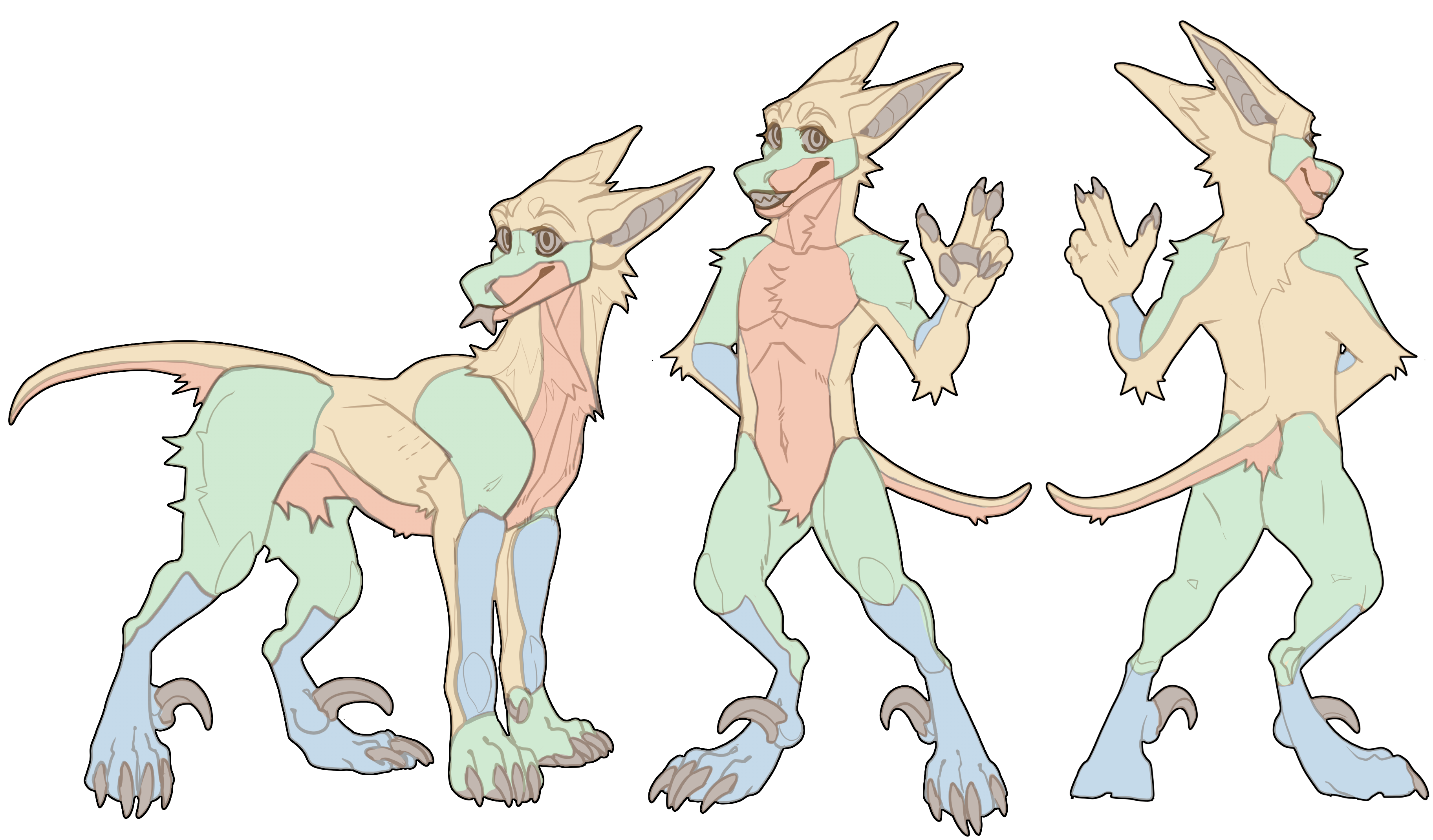
Rarity legend — match colours on the chart
Very Common☆Common★Uncommon★★Rare★★★Very Rare★★★★
Small isolated patches are Common; full-body or unusual placements climb to Rare and Very Rare. Pick one placement, then optionally a scale type on top.
Very Rare★★★★= No scales
Very Rare ★★★★ does NOT mean more scales. In the scale system, ★★★★ = NO SCALES. A fully scaleless Arcanus is intentionally treated as the rarest scale outcome — an Arcanus with no scales at all sits at the top of the chart.
Placement rarity reference
Blue zoneVery Common
Green zoneCommon
Yellow zoneUncommon
Red zoneRare
No scales (scaleless)Very Rare
Cross-reference with the chart above to find each placement.

Rarity legend
Very Common☆Common★Uncommon★★Rare★★★Very Rare★★★★